Wednesday, 7 October 2015

Ready Player One

Ready Player One

This book may be most famous for the competition which was announced on its release: if you could solve the puzzle which had been incorporated into its pages, you could win a DeLorean.  Like the one from Back to the Future.  You remember Back to the Future, right?  It was from the 80s.  So many things happened in the 80s.  Here's a bunch of other things from the 80s!

If you enjoyed that paragraph, you'll probably enjoy Ready Player One.  If you didn't, well, you're probably a sane human being.

Ready Player One was written by Ernest Cline, a screenwriter, and interestingly enough the film rights were sold on the same day as the publishing deal, a fact that I will come back to later.  It tells the story of Wade Watts, a teenager living in Oklahoma City in the year 2044, in a time when energy crises have left the world poverty-stricken and mostly uninhabitable.  Instead, most people have retreated to the Oasis, an online virtual reality game that has absorbed and taken the place of the Internet.  Most of the story takes place inside the Oasis, where Wade (also known by his character name Parzival) is one of many players trying to track down an easter egg hidden within the programming by its deceased, eccentric programmer, James Halliday. The prize: ownership of his company, worth $240 billion.

At the outset of the novel, James Halliday has been dead for five years and no one has made any progress in the hunt for his easter egg.  Most of the players searching for it, known as egg hunters or "gunters" for short - a name I detest - have given it up as a lost cause, until Wade finally uncovers the first of the three keys necessary and reignites the world's interest in the hunt.  The plot of the novel follows the race between Wade, his friends, and an unambiguously evil faceless corporation to solve the various puzzles that lie between them and the easter egg.  It's hardly a ground-breaking storyline, but it is serviceable, and I can't complain too much about the structure.  What I will complain about, at length, is the content.

First of all is the character of Wade.  We are introduced to him as a character who nobody particularly likes, not even himself.  I imagine this is to set him up as a loveable underdog for his eventual rise to heroism, but instead it just made him unlikeable.  To exacerbate this, Wade is obsessive about his hunt for the egg, and it's here that my complaint at the beginning of the review comes in.

We are told that James Halliday grew up in the 80s and harbours a lot of nostalgia for that time.  Therefore, it is reasoned, in order to find his egg you will need to be an expert on 80s popular culture, especially video games, film, and music.  For a more subtle author this would be an opportunity to work in lots of sly references to various 80s icons.  Instead, Cline chooses to bludgeon us over the head with it, usually with Wade as his mouthpiece.  Rather than working the influences of the decade into the narrative, we are just treated to lists of Things That Are From The 80s.  For example, this is part of the description of Wade's friendship with his only friend and fellow egg hunter, who he knows only through the Oasis, called Aech:

"Sometimes we even conducted our research together.  This usually consisted of watching cheesy '80s movies and TV shows here in his chat room.  We also played a lot of videogames, of course.  Aech and I had wasted countless hours on two-player classics like Contra, Golden Axe, Heavy Barrel, Smash TV, and Ikari Warriors."

My eyes began to glaze over about two items in.  This isn't just bad novel writing, it's barely even worthy of BuzzFeed.

Not content with simply listing items, Wade also goes to lengths to tell us how often he's consumed this media.  This begins in the first chapter where he begins to watch an episode of Family Ties, and we are told that he has already watched "all 180 episodes, multiple times".  He's watched WarGames "over three dozen times", and when it comes to the author's favourite game, Black Tiger, Wade says "I'd studied the game until, like Halliday, I could reach the end on just one credit.  After that, I continued to play it every few months, just to keep from getting rusty."

There's also Wade's tendency to blurt out random trivia, particularly when it comes to music.  Obviously, music is a bit tricky to include in written media, so Cline's ingenious workaround is to have Wade list the track, the artist, and usually the year of release whenever he wants to include a soundtrack in the novel.  This was tiresome after the first time.

The other major problem is that most of the dramatic points in the story, where Wade is pushed to his limits, he's playing a video game.  I'm not talking about the Oasis itself here - generally the important points on Wade's quest involve some retro game inside the Oasis.  The issue is that reading about someone playing a video game is, unfortunately, pretty boring.  Not to mention the fact that many of the games that Cline chooses, being arcade games from the 80s, are very repetitive.  One moment in particular that stands out is Wade having to play a perfect game of PacMan.  I'm not going to say that it's impossible to make that exciting using the written word, but I will say that in this case Cline fell pretty far short.

There are some other relatively minor complaints I had with Ready Player One, including the rather fuzzy rules surrounding the operation of the Oasis which tend to veer between overall very vague and extremely specific on certain areas; and the slightly bizarre way the relationship between Wade and the love interest Art3mis is treated.  However, I think the real root of my dissatisfaction with the novel was that it's clearly been written in the wrong media.  Ready Player One is far more suited for film, where clever references can be slipped into the background rather than having to be spelled out, and the very visual medium of video games can be brought to life (although I have to admit that I am sceptical about how well that will really translate).  

Fortunately, as I said at the start, the film rights were sold on the same day as the book itself, and the film is under development, direct by Steven Spielberg and slated for release some time in 2017.  So, although I would not recommend this book to read, I will be looking forward to the film with some interest.

Wednesday, 26 August 2015

Fallout: New Vegas and DLCs (Part 2) (note this does contain spoilers)

Honest Hearts

The followup to Dead Money is Honest Hearts.  This takes you out to the north of the Mojave on a caravan trip through Zion Canyon in Zion National Park in an attempt to link up with New Canaan, a city founded by Mormon missionaries.  The first thing that happens in the DLC quest is that your caravan party is ambushed by the tribal inhabitants of the Canyon, killing everyone you're with.  This is a great set-piece and introduction to the quest.  Unfortunately, it's also the high point, and for me the story falls out steeply from here on out.

I don't have much to say about Honest Hearts because I don't think there was much to it.  The main quest is a series of fetch quests, and there's not much in the wide of side-quests to distract from it.  The story of the DLC is also told via a few massive textdumps in dialogue with the main characters.  I am not averse to a little reading in a game, but long periods of walking to locations to pick up items interspersed with long passages of text is not good storytelling in-game, and was outdated even at the time Honest Hearts was released.

On the positive side, the environments of the Zion National Park are very scenic, and a pleasant contrast with the Mojave Wasteland.  The colouring is far more vibrant and the canyon setting allows a verticality which is not possible in the desert of the main game.

Overall, Honest Hearts is just about worth checking out once, and at the very least didn't make me want to stop playing like Dead Money did, but overall it was a bland and forgettable experience.

Old World Blues

Unlike Dead Money and Honest Hearts, I had no idea what the story was before I started Old World Blues.  The DLC is initiated by finding a crashed satellite projecting something onto an abandoned drivethrough cinema screen, and this fairly bizarre set up is carried through into Old World Blues itself.

The quest starts by yourself waking up in a lab in the Big Mountain (Big MT for short, or Big Empty as many of the characters call it) to be informed by a bunch of Think Tanks - floating brains in jars with faces on attached monitors - that your brain, heart and spine have been amputated and replaced with cybernetics.  And they've lost your real brain.

As you can probably tell, Old World Blues has far more of a sense of humour about itself than the rest of New Vegas and the DLCs.  I think this could be a bit hit or miss for some people, but I enjoyed it.  The story is almost reminiscent of a Saturday morning cartoon - the Think Tanks are constantly taunted by one of their former colleagues, Dr Mobius, from his fortress styled The Forbidden Zone, guarded by an army of roboscorpions.  The main story involves you confronting Dr Mobius to retrieve your brain, which will let you leave.  You don't have to take your brain with you.

I enjoyed most of Old World Blues, but it is not without its issues.  The main one is that the enemies, most of all the roboscorpions but many others to some extent, have huge amounts of health and armour.  More than once I was confronted with packs of roboscorpions which I had no hope of killing before they killed me, simply because they take so long to die.  This made for some frustrating encounters that were re-loaded again and again, and at one point I had to resort to console commands just so that I could progress.

That aside, Old World Blues is a good experience.  The setting is clever, and plays into Fallout's strengths as 50s throw-back sci-fi.  I found the writing enjoyably silly, and was sufficiently drawn in to the area to seek out and complete several of the sidequests, which I didn't have the patience for in either Dead Money or Honest Hearts.  I would recommend Old World Blues with the caveat that it can feel like running into a brick wall in places due to the bullet-sponge enemies.

Lonesome Road

All of the previous DLC missions are building to some degree or another to this one.  Lonesome Road tells some of the backstory of the player character through interactions with another Courier, called Ulysses.  There are references to Ulysses throughout the previous DLCs, and even in the main game, although they can be well hidden or oblique, and unfortunately I think the developers fell a little flat in their aim of building up a desire in the player to hunt Ulysses down.  I was vaguely aware of him being someone I should look for, but I wasn't entirely sure why.

This is made abundantly clear in Lonesome Road, however.  This takes place in a place called the Divide, an area plagued by earthquakes and radiation, the main features of this are military bases. As you progress through the area, Ulysses contacts you at various points using your ED-E robot companion to accuse you of causing the devastation all around.  Apparently the Divide was a thriving community until the player character brought something there at some point in the past, which caused all the nuclear warheads hidden in the military bases to detonate.

This area is one of the most striking in the game, full of buildings tilting at bizarre angles, the ground ruptured and cracked, and progress blocked by rockfalls which require you to blow up small warheads to remove.  This more than any other part of the game helps to progress the story through environment, using the juxtaposition of Ulysses's descriptions of how it used to be with its current state to create a real sense that something terrible has happened here.

I was also a big fan of Ulysses's characterisation.  His dialogue was a bit rambling at times, and his motivations were a bit unclear - from what he tells you it becomes apparent that the destruction caused by the player character is hardly their fault, as it seems they were tricked into carrying whatever device set off the warheads and had no idea that that would be the result, and yet he holds the character responsible.  However, I found the dichotomy between him extolling "old world" (i.e. pre-war) values whilst sneering at those who want to use the old world technology fascinating.  He wants to recapture the essence of America, to the point of wearing its flag on his back, without any of the baggage that goes alongside it.

I very much enjoyed Lonesome Road and I would rate it easily the best of the four DLC missions.  I do wish there had been a little more of the build up to make the final confrontation with Ulysses more dramatic, but this is a minor flaw.  If you only play one of the DLC stories, make it this one.

Final Thoughts

Overall, I think I may have been a little uncharitable to Fallout: New Vegas the first time I played through, and I think this is greatly attributable to the very slow start.  Once you do get into the game and are able to explore the world a little more, there is a lot to offer, and the branching storyline where you decide who to back at the final battle is neat, if falling a bit flat in execution.

I think overall the DLCs are not something I would return to - whilst they did for the most part have interesting storylines, the gameplay was somewhat lacking.  The theme of the characters looking to the old world for inspiration - Elijah to harness its weaponry, the tribals of Zion Valley fearing it and declaring it taboo, the tunnel vision of the Think Tanks refusing to accept anything outside their old world labs, and Ulysses idolising the old world values - did makes for a satisfying thread to follow.

I think the final question is whether New Vegas measures up to, or surpasses, Fallout 3.  I would have said no at the beginning of the playthrough, but now I am not so sure, and I think another play of Fallout 3 may be on the horizon...

Tuesday, 4 August 2015

Fallout: New Vegas and DLCs (Part 1) (note this does contain spoilers)

Fallout: New Vegas and DLCs (Part 1)

Fallout: New Vegas came out in 2010, with four DLC expansions offering new areas through the following year to 2011.  So why am I reviewing this now?  The answer is simple - the Fallout 4 announcement trailer got me in the mood to revisit this game, which I didn't love the first time around, to see whether first of all I was wrong in my initial assessment, and to discover what the DLC had to offer.

I will preface this by saying I was a big fan of Fallout 3, which was my introduction to the Fallout universe.  I have gone back to Fallouts 1 and 2, but I wasn't able to get into them; the gameplay differences were too severe.  I was therefore pretty excited by the prospect of Fallout: New Vegas, and was fairly let down when it came out.

I think this is for a few reasons, primarily the main story quest.  The game starts off with you rising from the grave, having been robbed and then shot in the head during the introductory cut scene by a man in a checkered suit.  The character creation sequence takes the form of a physical by the doctor that cured you of being-shot-in-the-head-itis, and then you're dumped into Goodsprings, a singularly boring town.  You're told that you should head south, because if you head in any other direction there are nasty monsters and sure enough, if you head off the path you're told to take you will die pretty quickly.  This is the route you have to take to get to New Vegas, which bear in mind is the place the game is named after and where the game really begins, in my opinion at least:


As you can see, it's quite a distance.  This takes at least a couple of hours of gameplay and probably more like five or six hours the first time.  Re-playing through this part of the game I realised I may have been a little uncharitable the first time round - it's not that nothing at all happens, but the interesting events are spaced pretty far apart.  In addition, once you get to Vegas and finally confront the man who shot you, Benny, the confrontation is somewhat anticlimactic.  You can find him more or less immediately, and kill him fairly shortly after (or allow him to escape if you want, although you'll run into him later and have to finish the job).  It's at this point the world opens up, as you start to gain levels far more rapidly and the main conflict of the story begins to emerge.

The rest of the main story deals with the war between the New California Republic, a semi-legitimate government moving in from the West whose grip on the areas surrounding Vegas is tenuous at best, and the Legion, a collection of tribes from the East who have been united by a dictator/warlord calling himself Caesar and taking trappings of the Roman empire.  In the middle of this is New Vegas, which is ruled by Mr House, a shadowy figure lurking in the depths of the Lucky 38, a casino that hasn't been open to the public for many years - except for the player character.

The Legion are preparing to attack Hoover Dam for the second time, having been barely turned back the first time by the NCR.  The second half, or rather two-thirds, of the game is you deciding which of the factions to back at the battle of Hoover Dam - the NCR, the Legion, or Mr House - and gathering support from various splinter groups around the Mojave wasteland.

I was not overly enamoured of this part of the story either, which boils down to you visiting each group in turn, doing quests for them until they agree either to help or at least not oppose your chosen faction, and then going back to find out what's next.  This is broken up by the wider variety of sidequests available at this point in the game, and in the case of my playthrough, by the DLC areas.  These are done during the course of the main story, and involve the player character travelling to a new map for an unrelated side story.  There is a recommended order in which they should be played, and these are my thoughts of each of them in that order (although I actually swapped around the first two during my playthrough).

Dead Money

Dead Money starts with the character entering an abandoned bunker, being knocked unconscious and waking up at a fountain beneath a stormy sky in a ruined village.  You are informed by a hologram of an old man named Brother Elijah that he has kidnapped you, taken away your belongings and fitted you with a bomb collar that will explode unless you help him rob a casino that has been empty since the nuclear war that is the backdrop of all Fallout.

This is essentially the survival horror DLC package.  Its main features are unkillable or hard to kill enemies (of two varieties!) and areas which are harmful or just kill you if you stay in them for too long.  Whilst this may appeal to some players, the stark departure from the usual Fallout gameplay made this a frustrating slog to play.  

To go into more detail, the main enemies of the area are the Ghost People, who are humanoids dressed all in black.  When you kill them, they fall unconscious rather than die and must be hacked apart within around 10 seconds to make sure they stay dead.  Individually, this is not too bad, but when there are two or three together it's very hard to finish each of them off before they come back to life.  After playing this, I found out that there is a bug with the Ghost People - apparently they are given Perception 0 which should make them easy to sneak past and avoid fighting altogether, but instead this gives them infinite Perception and they will notice you as soon as you are within range, and perhaps if this was working as intended they would be a more interesting challenge.  

The other main enemies are the security holograms, which are holograms of security guards.  They can't be killed through normal combat, and have to be turned off at nearby terminals or emitters.

This means that on the face of it, the game wants you to sneak around slowly and avoid combat where ever possible.  Unfortunately this is where the area control aspects come in to play.  There are two: radio speakers, and The Cloud.  The speakers interfere with the bomb collar, which will explode if you are near them for too long.  This generally manifests itself by getting a message that the collar is beeping, and then having to retreat until it is not, then peering into the room to find the speaker.  Invariably it will not be visible from outside its range, so this results in a series of sprints further and further into the dangerous area to find it and destroy it.  Even then, some speakers cannot be destroyed and must be turned off remotely.

The Cloud is a poisonous cloud that covers certain areas and will drain your health as long as you are in it, and also obscures your vision.  This leads to mad, half-blind dashes through Cloud covered areas which in my case at least often ended with a death and re-load.  Of course, both the speakers and The Cloud forcing you to move fast attract the attention of the Ghost People.

You may be thinking at this point that I didn't much care for Dead Money, and you would be right.  It was not without its redeeming features, however.  The story is broken into two parts - the first part in the village outside the casino, trying to break in, and the second inside once you have managed to open it.  The second half is a vast improvement, mainly due to much reduced numbers of Ghost People, and less Cloud and speakers in general.  The story is also pretty good, and Father Elijah is a compelling character who I am reluctant to refer to as a villain, even though that's pretty much what he is.  On balance, however, I disliked Dead Money to the point where I almost gave up and re-loaded a previous save so I didn't have to finish it, and I think on any further playthroughs I will be skipping it altogether.

This post is much longer than I thought it would be, so I'm going to leave it here and revisit the rest of the DLCs and give my final thoughts on New Vegas later.

Monday, 15 June 2015

My Performance at PPTQ Little Chalfont

PPTQ Little Chalfont: A Tournament Report


Or, Why Sealed Sucks


PPTQ Little Chalfont was the first Magic tournament in a long time where I'd had both the hope and the expectation of doing well.  The format was Modern Masters 2015 sealed, and I'd spent a fair amount of time between the full spoiler being announced and the event making practice sealed pools.  I even went as far as typing up a sealed primer for some friends on Facebook with my observations from the pools I'd made and going through the spoiler several times.  I felt like I had a good handle on the format and I knew how I wanted to build my pool if possible.

This was the first PPTQ I had been to since they were introduced.  Axion put on quite the event - they were aiming for the feel of a mini-GP, and they certainly succeeded in my view.  There were about 150 players registered, plus several side events and they even had John Avon was attending signing cards.  

The sealed registration felt like a cross between a Magic event and a lottery.  Several people dropped around me to keep their pools; fortunately (or unfortunately) mine was decidedly average so I got to play the day.

The pool I passed was a bit of a monster.  Going through the cards, White, Blue and Black were pretty mediocre, but then I got to Red.  Wildfire?  Comet Storm? Charging Hellkite?  Niv-Mizzet in the gold section as well!  I registered a 4cc control deck, base Red/Green and splashing Blue for Niv-Mizzet and Narcolepsy and White for Arrest.  This would prove to be my first mistake of the day, the first of many.

Best rare in the format

In most or possibly all of my practice sealed pools, the best decks seemed to be four to five colour control decks playing all the removal and the bombs, and this was backed up by several of the sealed articles posted on sites like ChannelFireball in the week leading up to the event.  I defaulted to this when I built my deck at the PPTQ, and I think this was almost certainly a mistake.  Given the power of my red cards, I think I had hit on the small percentage of pools that didn't need to play more than three colours in order to have the necessary power to compete. Beginning at Round 3 or 4, I was siding down to three colours every round, and possible should have only really been playing Blue/Red splashing Green for Scute Mob.  My Blue was a little lacklustre other than Niv-Mizzet, but did feature two counterspells.  My Red was great, and as well as the bomb rares I had two copies of Burst Lightning and two Fiery Falls.

Once I had built my deck, I took it out to the other room to show to a couple of people.  I remember saying that if I could have designed my own sealed pool, I wouldn't have chosen anything much different to what I had registered.

I then immediately lost round 1.

My sweet rares lost to a bunch of Kozilek's Predators.  I was not so much put on tilt as I was reeling from the shock.  I'd have to win out to make top 8, which was really my goal coming into the event.

So I did!

I don't find going through every round that interesting, so I'm not going to.  I cast a lot of bomb rares and my win percentage was pretty much correlated with how much that happened.  There were a few particular bits that I enjoyed from the tournament which I'll go through.

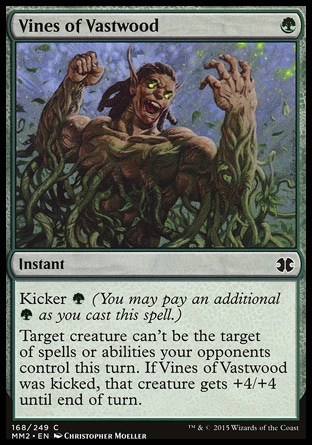
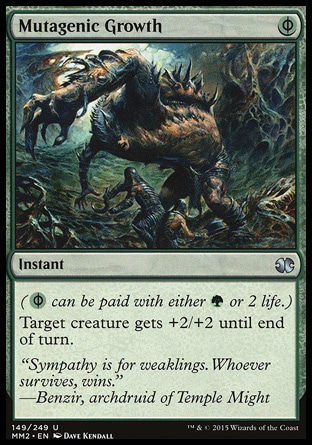
Round 2: I played against a fairly new player.  In game one, she played a Primeval Titan, but did not search up any lands.  I like to think I'm pretty sporting, but I'm not going to go as far as to read out my opponent's cards for them. On her next turn, she attacks with the Titan and a 5/5 Gorehorn Minotaurs, and again doesn't search up any lands.  I have 7 lands in play and Comet Storm in hand, and I'm at 12, so I block Cathodian against Minotaurs looking to use the mana to Comet Storm away Titan, Minotaurs and a third creature.  I go to damage but my opponent stops me, taps GG and casts Vines of Vastwood on Primeval Titan.  This is where I begin to get a sinking feeling.  At least I can survive at 2 life even if I don't kill...hold on, she's tapping another green?  Mutagenic Growth on Titan?  Didn't need those lands bro!


The Comboooooo!

In round 3 I made my worst play of the tournament, attacking my Hellkite Charger into effectively two 3/3 and one 2/2 flier due to Helium Squirter, when I could have instead cast Wildfire precombat to destroy all my opponent's permanents.  I realised as soon as I turned my guy sideways, and had to sweat for a good 30 seconds before my opponent gave me far too much credit and declined the excellent blocks.  Obviously I returned the favour by Wildfiring all her permanents.

At some point, I played against Eduardo Sajgalik, who is a some-time magic pro and in fact made the top 8 of a modern pro tour a couple of years ago.  I was a bit nervous and I think it came across in my gameplay - I was rushing through things a bit.  This came to a head on the last turn of the game when he tapped all but two lands and played Apocalypse Hydra, and I snapped off Mana Leak before checking that he'd tapped enough lands to cast it for the 9 he'd declared.  We went through and luckily he hadn't over-tapped, and the Hydra was countered.  On my turn I ripped Burst Lightning for the win and practically threw the Eldrazi Spawn I needed to cast it off the table.  I do feel a bit bad about this as I think I may have been a bit rude, and Eduardo, if you ever read this - I'm sorry, nerves and adrenaline got the best of me.

Strangely for a sealed tournament, I felt the day got easier as I went through.  Usually the top tables at the end of the day are full of high powered decks (like mine), but although I did play against some good cards generally my deck overpowered even those at 5-1 and 6-1.  I think I got better at sideboarding and playing as the day went on, and there were a couple of times I was very pleased with my play.  For example in game 2 of one of the later rounds, my opponent hesitated and reached for an Island when I played a spell early on.  I'd seen Mana Leak in game 1, and at this point I wrote down "mana leak!" on my scorepad and played around it for the rest of the game.  At the end he shows me the Mana Leak in his hand which had been stranded there since turn 4 or 5.

During the top 8 draft and deckbuilding I decided I probably wasn't going to the PTQ even if I won, so I scooped to my quarter finals opponent.  Final position was 5th, all the top 8 got a box of MM2015 and I snagged a Goyf in the draft, so I was pretty pleased.

The Top 8. The overall winner was Ben Jones, second from right

As I said, I did a lot of practice for this event and I really wanted to do well.  However, looking back I can't really tell whether my finish was due to playing well, or simply opening a busted pool and drawing my rares at the right time.  As I said I think I misbuilt my deck pretty horribly and made some horrific misplays (the dragon attack stands out in my mind as particularly egregious, but I'm sure there were many more I missed completely), but on the other hand I was pleased with my sideboard plans and I think I did play a few games particularly well.  And that's why sealed sucks - it's not that it's all luck, as some people think, it's that it's impossible to tell how much of it is luck.  I'm happy with my finish, but did I really earn it?  I don't think that's a question I can really answer.